
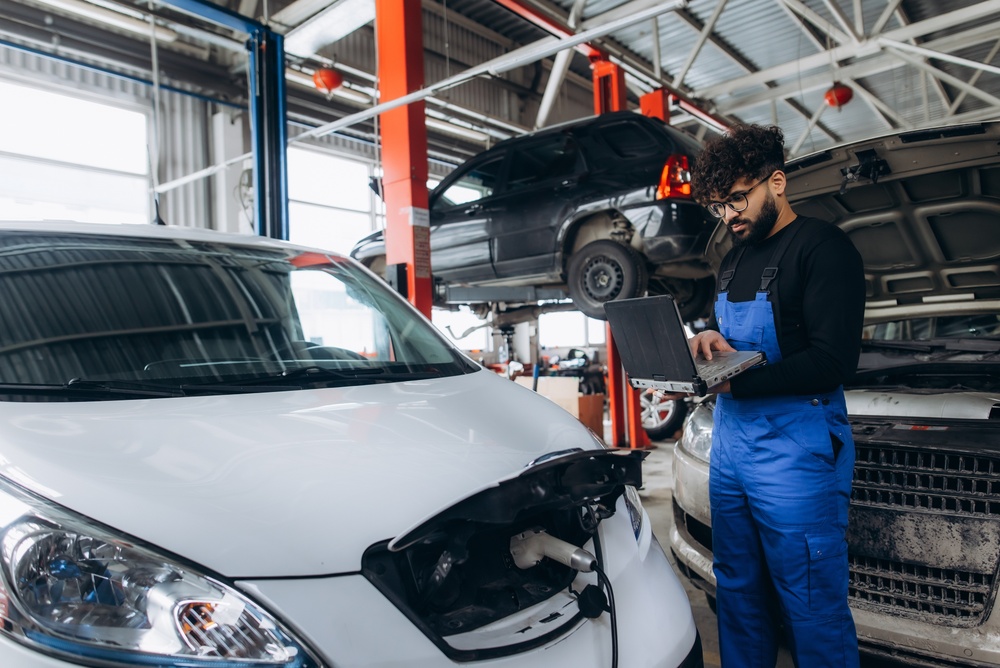
Electric vehicles are becoming increasingly common on UK roads, but many drivers are still unsure how the MOT differs from a traditional petrol or diesel vehicle. While the process may seem unfamiliar at first, the reality is far simpler than most expect.
In this article, we explain what happens during an electric car MOT, breaking down what is checked, common reasons for failure, and why Pantech Auto Technicians are a trusted choice for keeping your EV safe, compliant, and road-ready.
Key Takeaways
- Electric cars must have an MOT after three years and annually thereafter, with the same DVSA safety standards as other vehicles, alongside EV-specific checks, but no emissions or fuel system testing.
- Most electric car MOT failures are caused by general wear and tear, with common issues including tyre wear, brake corrosion or reduced efficiency, suspension wear, lighting faults, and windscreen or visibility problems.
- Pantech Auto Technicians provide electric car MOTs and servicing in Guildford, helping EV owners keep their vehicles safe, compliant, and roadworthy.
Do Electric Cars Need an MOT?
Electric vehicles are subject to the same legal MOT requirements as petrol and diesel cars in the UK. This means they must have their first MOT test once they reach three years old, followed by an annual test thereafter.
The MOT itself is carried out to the same Driver and Vehicle Standards Agency (DVSA) standard inspection as any other vehicle, focusing on key safety and roadworthiness checks to ensure the car is safe to drive on public roads.
The main difference is that electric cars are not subject to emissions testing, as they do not produce exhaust gases.
Also read: Complete Guide to Electric Cars in the UK
What’s Checked During an Electric Car MOT?
Despite differences in how an electric vehicle is powered compared to a petrol or diesel car, the vast majority of the MOT inspection process remains the same. This is because the MOT is designed to assess overall safety and roadworthiness, rather than how the vehicle is powered.
Where differences do exist, they are mainly due to the absence of a combustion engine in electric vehicles. As a result, there is no requirement for emissions testing or checks on fuel system components. Instead, the focus shifts slightly to ensuring that EV-specific components are safely installed and free from visible defects.
The table below compares what is checked in a standard MOT for petrol and diesel vehicles against what is inspected during an electric car MOT:
| Inspection Area | Standard MOT (Petrol/Diesel) | Electric Car MOT |
|---|---|---|
| Lights, indicators, reflectors | ✔ Checked | ✔ Checked |
| Steering and suspension | ✔ Checked | ✔ Checked |
| Brakes and braking performance | ✔ Checked | ✔ Checked |
| Tyres and wheels | ✔ Checked | ✔ Checked |
| Windscreen, wipers, washers | ✔ Checked | ✔ Checked |
| Seatbelts and mirrors | ✔ Checked | ✔ Checked |
| Exhaust emissions test | ✔ Required | ✘ Not applicable |
| Fuel system inspection | ✔ Required | ✘ Not applicable |
| Engine components | ✔ Inspected | ✘ Not applicable |
| High-voltage electrical system | ✘ Not applicable | ✔ Visual safety check only |
| Battery mounting and security | ✘ Not applicable | ✔ Checked |
| Charging port condition | ✘ Not applicable | ✔ Checked |
Do Electric Cars Pass MOTs More Easily?
It’s a common assumption that electric vehicles are easier to pass an MOT as they have fewer mechanical parts than petrol or diesel cars.
However, an MOT is still primarily focused on safety, meaning EVs are tested just as strictly as any other car. Key areas such as tyres, brakes, steering, and suspension can still result in a failure if they are worn or not functioning correctly.
In fact, EVs can sometimes experience increased tyre wear due to their additional weight and instant torque, which can make regular checks and maintenance just as important as with any other vehicle.
Common MOT Failures in Electric Vehicles
Even though electric vehicles remove several engine-related components from the MOT, they are still just as likely to fail on standard safety-related issues. In most cases, failures are caused by general wear and tear on parts that every vehicle relies on, rather than anything specific to the electric drivetrain.
Common reasons for MOT failure in electric vehicles include:
- Tyre wear: EVs are heavier than many petrol or diesel equivalents and deliver instant torque, which can lead to faster tyre degradation, particularly at the front.
- Brake issues: Reduced use of traditional brakes due to regenerative braking can lead to corrosion, sticking components, or reduced braking efficiency over time.
- Suspension wear: The additional weight of electric vehicles can place greater strain on suspension components, increasing wear.
- Lighting faults: Blown bulbs, faulty LEDs, or electrical connection issues remain one of the most common MOT failure points.
- Windscreen damage or visibility issues: Chips, cracks, or obstructions in the driver’s line of sight can result in a failure if they fall within the critical viewing area.
- Wiper and washer problems: Worn wiper blades or ineffective washers that reduce visibility can also lead to failure.
- Steering or alignment issues: Wear in steering components or incorrect wheel alignment can affect handling and safety.
How to Prepare Your Electric Car for an MOT: Top Tips
A few simple checks before your MOT can help ensure your electric vehicle is in the best possible condition for testing and reduce the likelihood of unnecessary issues on the day. Our top tips include:
- Check that all tyres have sufficient tread depth, show no signs of damage or uneven wear, and are inflated to the manufacturer’s recommended pressure.
- Test all exterior lights, including headlights, brake lights, indicators, and number plate lights, to ensure they are working correctly and clearly visible.
- Make sure the windscreen is clean and free from chips or cracks, particularly in the driver’s line of sight.
- Check that wiper blades clear the screen effectively without streaking and that the washer jets are working properly with sufficient fluid.
- Take a moment to check for any dashboard warning lights, as these can indicate underlying issues that may lead to an MOT failure.
- Carry out a quick visual walkaround of the vehicle to ensure there is no obvious damage, loose trim, or issues that could affect road safety.
Also read: Complete Guide to Checking Tyre Tread Depth
Why Choose Pantech Auto Technicians for an Electric Car MOT?
If your electric vehicle is due for its MOT or you simply want peace of mind that it is safe and roadworthy, at Pantech Auto Technicians, we offer a complete electric car Guildford MOT and vehicle servicing.
We carry out electric vehicle MOTs alongside regular servicing and repairs, helping to make motoring as straightforward as possible. Our MOT testing covers all standard safety areas, including brakes, tyres, lights, suspension, seatbelts, and more, ensuring your vehicle meets the required DVSA standards.
Also read: What Do You Need to Take to an MOT Test?
“At Pantech Auto Technicians, our knowledge of electric vehicles allows us to carry out MOTs with a clear focus on safety, detail, and manufacturer standards,” says Duncan, Owner.
Alongside MOT testing, Pantech Auto Technicians also provides electric car servicing in Guildford, which focuses on key maintenance areas such as brake fluid, pollen filters, tyres, and 12-volt battery health, where required. With fewer moving parts than traditional vehicles, EV servicing is generally quicker and more straightforward, helping to keep your vehicle in good condition for longer.
To book an appointment or speak to our friendly team, contact us today to arrange your electric car MOT with Pantech Auto Technicians.